
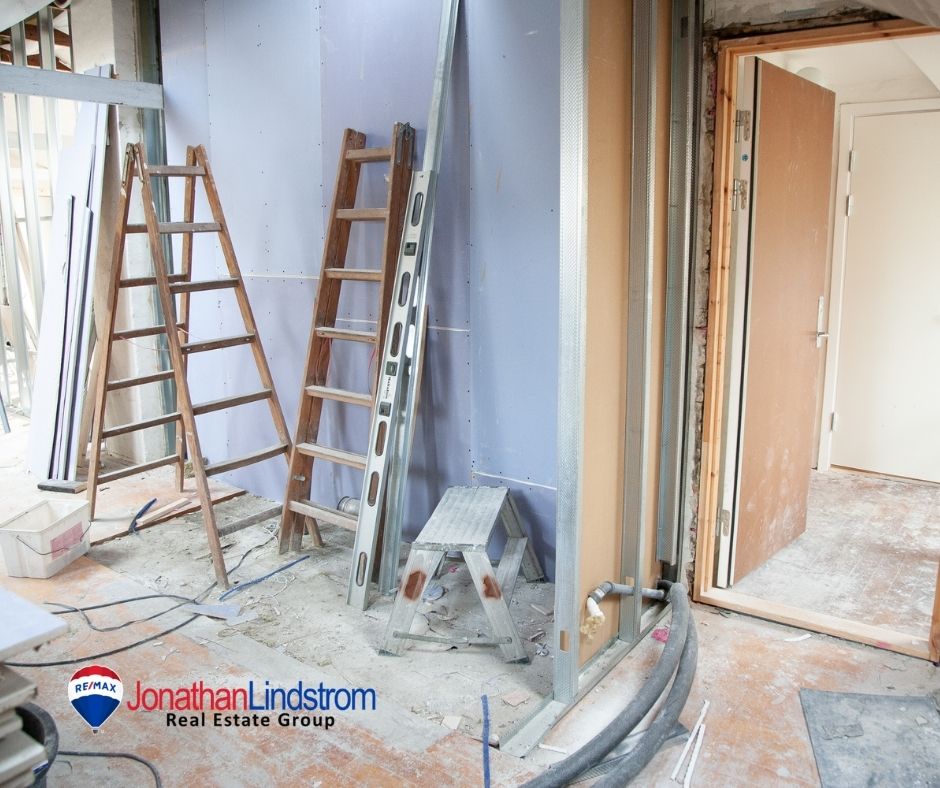
SHOULD I REMODEL MY HOME BEFORE LISTING?
How to make a home stand out in the market and possibly get top dollar at closing.
Ready to list or wondering if it’s time to renovate? Here are a few important questions homeowners should consider asking an experienced real estate agent.
1. Are there simple updates that can have a big impact in my home’s resale value?
Updating a home doesn’t have to involve a complete overhaul and demolition crew. Before getting too carried away with updates.
2. Which home renovations will give me the biggest return on investment?
While new hardware and fresh paint may be enough to get most homes ready for the market, nothing stands out like an updated kitchen or bathroom
The return on investment from remodeling will be different for every home, and sellers should weigh carefully how their updates may impact resale value.
or quick and simple updates start by updating finishes, such as replacing door knobs or faucets with fixtures in trending colors such as black or brushed gold. Lighting fixtures are another area that can be easily and often inexpensively updated. For an even bigger impact, sellers should consider the power of paint. Adding neutral or modern colors to key features or even repainting the walls can completely transform a room.
3. How can I fund (or afford to) pay for home renovations?
The cost of renovating can add up quickly, which is why it is not uncommon for homeowners to fund a project through supplement financing such as a Home Equity Line of Credit, or HELOC.
Working with a mortgage professional of their choice, a homeowner may be able to open a line of credit worth up to 85% of their equity (equity is defined as the market value of the home minus the remaining balance of any mortgage loans or other liens or loans secured by the property). For a set time period, often the first 10-15 years after opening the line of credit, the owners have to make only payments on the interest of what they borrow (there may also be a minimum monthly fee that a borrow has to pay to keep the line open). After the initial interest-only period, the consumer would have to make principal and interest payments, but if HELOC proceeds are used for renovations shortly before sale, the interest-only period may still be in effect and the loan balance can be paid off when the home is sold. Ideally, the renovations will help the home sell at a profit.
Important to note: If the home isn’t sold or the HELOC isn’t paid off within the set interest-only period for the particular line of credit, the consumer will need to make monthly payments of principal and interest and may be faced with what is called is a “balloon payment” that will become due. This is a lump sum to cover the remaining overall principal balance borrowed under the HELOC. And as a HELOC is secured by a lien on the consumer’s home, there is more risk involved if an owner’s circumstances change and they are unable to make payments and unable to sell the home. Also, a HELOC will likely have a limited draw period in which the consumer can borrow money, so it might be best to ensure that the total amount needed for renovations is taken out during that draw period.
Another option to finance a remodeling project may be a cash-out refinance, which might make sense for those planning to stay in their home a few years longer before selling and who have significant equity in their home.
A cash-out refinance is a new first lien mortgage loan that is in an amount higher than the remaining principal balance on a consumer’s mortgage loan (the loan balance on the refinance loan is generally between about 80%-90% of a home’s then-market value). The new loan pays off the original mortgage loan, with the remaining balance paid out in cash to the homeowner less closing costs and fees.
Cash-out refinances often have a lower interest rate than a HELOC, and there’s generally no balloon payment after 10-15 years, which is why they may make more sense for those planning to stay in their home for a few years after the updates are made.
When it is time to put a home on the market, many experts agree – even in a competitive market where buyers have fewer options, many are still searching for an updated home. It’s simple – buying a home can be stressful enough. Why add the hassle of renovations?