
The Mortgage Rate You See May Not Be the Rate You Get
You may have seen that mortgage rates have recently climbed to their highest point since November 2023. But you need to know that headline comes with an important asterisk: the rate being reported wasn’t calculated for you.
It’s easy to assume there’s one mortgage rate out there — and whatever number you’re seeing online is what you’d get if you bought a home today. But that’s not the case.
The rate you see and the rate you could actually get aren’t necessarily the same. And that difference could matter more than you think when you’re figuring out what you can afford.
Before you let today’s mortgage rate headlines make the decision for you, it’s worth finding out what your number could actually look like.
What Determines Your Actual Rate?
So, if there isn’t one mortgage rate everyone gets, what determines yours? It comes down to a mix of your finances and the type of loan you choose. A lender looks at the full picture to determine the rate you may qualify for, including:
Your credit score: This is about more than whether you pay your bills on time. Your payment history, how much of your available credit you’re using and how long you’ve had your accounts can all factor into your score. Generally, a stronger credit profile can help you qualify for a better rate.
Your debt-to-income ratio (DTI): This is calculated by dividing your monthly debt payments by your monthly income (before taxes) to come up with a percentage. The higher your DTI, the higher your rate could be.
Your down payment size and Loan-to-Value (LTV): Your down payment is how much of the purchase price you pay upfront. Your LTV looks at how much you’re borrowing compared to the home’s value. Both can affect the rate and loan options available to you.
Your loan type and term: There isn’t just one kind of mortgage. Different loan programs and terms come with different rates. Your lender can walk you through the options, what you qualify for and how they compare.
And honestly, even after you find a home you love, there may be other ways to change the numbers.
For example, a mortgage rate buydown allows you to pay an upfront cost in exchange for a lower rate and monthly payment. In some cases, a seller, builder or another party may offer to cover that cost as an incentive.
Negotiating for seller concessions can help too. Depending on your loan program, a seller may be able to give you money you can use for your closing costs. That could free up some of your cash to increase your down payment, pay down debt or make other tweaks that could help you qualify for a better rate.
To get the best rate possible, ask your agent what sellers are willing to negotiate in your local market and how to negotiate to put yourself in the best possible position.
Want to Know Your Number? Start with Pre-Approval
If you want to know how your actual rate compares to the ones making headlines, the next step is talking with a lender. And as you start that conversation, you’ll probably hear two terms: pre-qualification and pre-approval. They sound similar, but there’s an important difference.
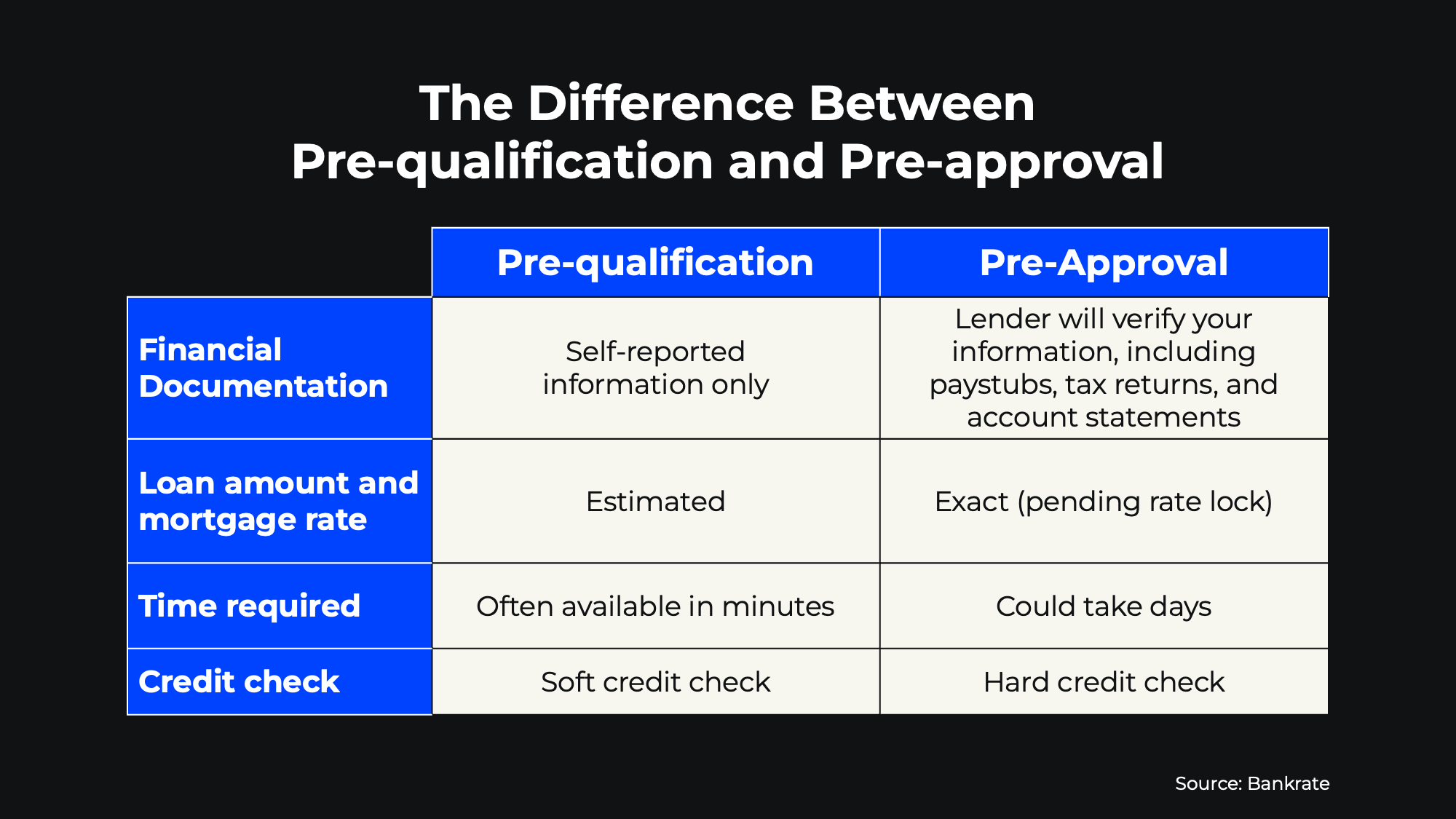
Pre-qualification gives you a general estimate of what you may be able to borrow based on information you provide.
On the flip side, pre-approval is actually a conditional commitment from a lender based on verified information.
And that verification matters. It’s why the pre-approval process gives you a more accurate picture of your options. Bankrate breaks it down like this.
That extra clarity can be a big help when rates are higher. Instead of wondering what the latest headline means for your plans, you’ll have numbers that are actually based on you.
Make the Most of the Conversation
Once you’re talking with a lender, don’t stop at “What rate can I get?” This is your chance to understand the bigger picture and how different choices could affect your finances.
Be sure to also ask things like:
What will I gain or lose by waiting 3, 6, or 12 months to buy a home?
Will I get any tax advantages when I buy – and what are they?
What could buying now and beginning to build equity mean for my finances compared to waiting?
How will future rate changes affect me?
Maybe those answers show you buying now could work. Or maybe they confirm that waiting is the better move for you.
Either way, you’ll know you’re making that decision based on your numbers — not someone else’s.
Bottom Line
The rate you see online can tell you what’s happening in the broader market. But it can’t tell you what buying a home could look like for you.